
NEWS
🚨 DEMOCRATS ARE COMING FOR TRUMP’S POWER! Republicans Accused of Allowing America to Drift Toward Authoritarianism as Democrats Prepare to Fight Back!

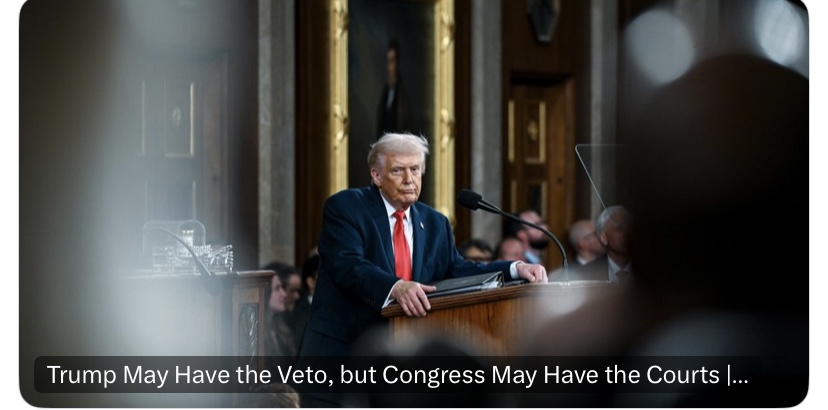
A major political showdown is taking shape in Washington, and President Donald Trump could be heading into one of the most challenging periods of his presidency. Following the Democrats’ historic victory in the 2026 midterm elections, which handed them control of both chambers of Congress, the balance of political power in the United States is about to change dramatically.
After spending much of Trump’s second term controlling Congress, Republicans are now preparing to surrender their majorities to Democrats, creating a new political environment in which the president will face increased scrutiny, legislative resistance and investigations into his administration.
But the bigger question is not simply whether Democrats can stop Trump’s agenda. It is whether they can restore the constitutional checks and balances that critics argue have been weakened during his presidency.
An increasingly heated debate is emerging over what Democrats should do with their newly acquired power. Should they aggressively challenge Trump at every opportunity, investigate his administration and reverse his policies, or should they focus on rebuilding American democratic institutions and restoring the traditional balance between the presidency and Congress?
For many political observers, the answer could determine the future of American democracy.
REPUBLICANS ACCUSED OF FAILING TO CHECK TRUMP’S EXPANDING POWER
One of the biggest criticisms surrounding Trump’s presidency has been the willingness of Republican lawmakers to support his decisions, even when those decisions raise questions about the limits of presidential authority.
Critics argue that Congress was designed to serve as an independent branch of government, capable of challenging presidential decisions and preventing any one individual from accumulating excessive political power.
However, they believe Republican lawmakers have frequently failed to exercise that responsibility.
The concern is that when members of Congress prioritize loyalty to a president over their constitutional responsibilities, the system of checks and balances becomes weaker.
Some critics have gone as far as warning that the United States has moved dangerously close to an authoritarian or totalitarian system of government.
These are serious political characterizations, and they remain contested. Nevertheless, the underlying concern is about whether America’s democratic institutions can effectively limit presidential power when the president’s own party controls Congress.
Now that Democrats have secured control of the House and Senate, they have an opportunity to change that dynamic.
DEMOCRATS FACE A MAJOR TEST OF LEADERSHIP
Winning control of Congress is one thing. Knowing how to use that power responsibly is another.
Democrats now have an opportunity to investigate government activities, demand accountability from administration officials, scrutinize federal spending and introduce legislation challenging Trump’s policies.
However, there are growing arguments within political circles that Democrats must resist the temptation to turn their victory into an opportunity for political revenge.
Instead, they are being urged to focus on restoring institutional independence, strengthening democratic accountability and demonstrating that they can govern effectively.
The distinction is important.
If Democrats spend their entire congressional majority pursuing political retaliation, they risk creating another cycle of partisan hostility that could further weaken public confidence in government.
But if they concentrate on protecting constitutional principles and ensuring that future presidents cannot exercise unlimited authority, their victory could have consequences extending far beyond Trump’s remaining time in office.
The challenge will be finding a balance between holding the administration accountable and delivering meaningful results for ordinary Americans.
TRUMP STILL HAS ONE POWERFUL WEAPON: THE PRESIDENTIAL VETO
Despite the Democratic victory, Trump is not losing his position as president.
He will continue to occupy the White House and retain one of the most powerful constitutional tools available to any American president: the veto.
This means that even if Democrats pass legislation through both chambers of Congress, Trump can reject those bills and prevent them from becoming law.
Congress can override a presidential veto, but doing so requires a two-thirds majority in both the House of Representatives and the Senate.
That is an extremely difficult threshold to achieve, particularly in an increasingly polarized political environment.
If enough Republican lawmakers remain loyal to Trump, Democrats may struggle to override his decisions.
Consequently, Washington could experience a period of intense political confrontation, with disagreements over government funding, taxation, federal spending and investigations into the administration.
Trump has already indicated that he is prepared to use his veto power against Democratic legislation, making the coming congressional term potentially one of the most contentious periods of his presidency.
THE BATTLE OVER AMERICA’S MONEY AND GOVERNMENT SPENDING
One of the biggest areas of disagreement is expected to involve congressional control over federal spending.
Under the United States Constitution, Congress has significant authority over taxation and government appropriations.
The president is responsible for implementing federal laws, but the power to authorize government spending belongs to Congress.
Critics of Trump’s administration have accused him of undermining this constitutional arrangement by refusing to spend certain funds appropriated by lawmakers and using tariffs to generate revenue.
Democrats are expected to challenge these practices and attempt to restore stronger congressional oversight of federal finances.
They could introduce measures designed to prevent the executive branch from withholding money that Congress has legally approved.
They may also seek greater restrictions on presidential tariff powers and pursue legislation aimed at addressing alleged corruption and conflicts of interest within the administration.
However, Trump could veto many of these proposals, potentially creating repeated confrontations between the White House and Congress.
The result could be prolonged negotiations, political disagreements and difficult decisions surrounding government funding.
WHY THE COURTS COULD BECOME DEMOCRATS’ MOST IMPORTANT WEAPON
With the presidential veto presenting a major obstacle, some legal and political commentators believe Democrats should consider a different approach: the American judicial system.
Rather than relying exclusively on legislation that Trump can reject, Democrats could use congressional oversight and appropriate legal challenges to defend the constitutional authority of the legislative branch.
The courts have already played an important role in disputes involving executive authority, federal spending and the limits of presidential power.
However, pursuing legal action is not always straightforward.
Some individuals affected by government decisions have successfully challenged those decisions in court, while others have encountered complicated legal questions about whether they have the right to sue.
One particularly important issue involves members of Congress attempting to bring lawsuits on behalf of the institution itself.
Federal courts generally apply strict standing requirements, meaning lawmakers cannot automatically sue simply because they disagree with a president’s actions.
They may need to demonstrate a legally recognizable injury before a court will consider their case.
This creates another challenge for Democrats.
If they want the courts to defend congressional authority, they must identify appropriate legal arguments and establish the necessary grounds for their cases.
Nevertheless, supporters of this approach believe the judicial system could provide a more sustainable way to reinforce constitutional boundaries than repeated political confrontations.
DEMOCRATS MUST PROVE THEY CAN GOVERN RESPONSIBLY
Perhaps the most important challenge facing Democrats is proving that they can use their new political influence effectively.
American voters did not simply hand them control of Congress to create another period of political warfare.
Their victory gives them an opportunity to address concerns surrounding the economy, government accountability, public spending and the direction of the country.
They must demonstrate that they can introduce meaningful policies, protect democratic institutions and provide effective oversight without allowing partisan interests to dominate every decision.
This will not be easy.
Trump remains president, Republicans still have substantial political influence, and the possibility of presidential vetoes means that many Democratic proposals could encounter serious obstacles.
There will also be pressure from within the Democratic Party to pursue aggressive investigations and challenge the administration over controversial decisions.
Some lawmakers may argue that a more confrontational approach is necessary to hold the president accountable.
Others may believe that institutional reforms and practical legislation should take priority.
How Democratic leaders manage these competing expectations will be crucial.
A DEFINING MOMENT FOR AMERICAN DEMOCRACY
The political consequences of the 2026 midterm elections could extend well beyond the next two years.
The United States is entering a period of divided government in which the president and Congress will be controlled by opposing political parties.
Historically, such arrangements have produced everything from bipartisan agreements to government shutdowns and prolonged legislative battles.
But the current situation carries additional significance because of the continuing debate over presidential authority and the independence of America’s democratic institutions.
The central question is whether Congress can reclaim its constitutional responsibilities without turning every disagreement into another political crisis.
For Democrats, this is an opportunity to demonstrate that protecting democracy requires more than defeating political opponents.
It requires defending institutions, respecting constitutional boundaries, demanding accountability and ensuring that the same principles apply regardless of which political party occupies the White House.
For Republicans, the coming congressional term will also raise questions about their willingness to exercise independent oversight rather than automatically supporting presidential decisions.
Ultimately, the strength of American democracy will depend not only on who controls Washington but also on whether its institutions can function independently and hold those in power accountable.
FINAL QUESTION: CAN DEMOCRATS FINALLY CHECK TRUMP’S POWER?
Donald Trump’s presidency is entering a new political chapter, and Democrats now have the congressional authority to challenge his administration in ways that were previously difficult.
But their greatest test may be resisting the temptation to use their victory purely for political revenge.
If they succeed in restoring congressional oversight, strengthening the rule of law and demonstrating responsible leadership, they could leave a lasting impact on American democracy.
If they fail, the country could face another period of political division and institutional confrontation.
One thing is certain: Washington is about to become a very different political battleground.
WHAT DO YOU THINK?
Do you believe Republicans have failed in their responsibility to hold Donald Trump accountable?

Heartbreaking News: Just Minutes Ago, Buckingham Palace Releases a Major Tragic Announcement About King Charles, Leaving Queen Camilla, Prince William and Princess Catherine Devastated as the Entire World Are in Disbelief

🚨 TAYLOR SWIFT’S CHIEFS GAME APPEARANCE TAKES AN UNEXPECTED TURN! Joined by Her Parents, Kylie Kelce and Baby Finn, But What Happened in the Stands Has Fans STUNNED!

Tragedy Strikes 30 Minutes Ago! King Charles Delivers Heartbreaking Announcement That Brings Britain to Tears: ‘Prince Harry has…. (For Full Information, Check Link In 👇🏻👇🏻)

🚨💔 “DON’T TELL THE CHILDREN UNTIL THEY ARE OLD ENOUGH TO UNDERSTAND!” — PRINCESS KATE MAKES A HEARTBREAKING REQUEST TO KING CHARLES III BEHIND CLOSED DOORS. Everyone assumed the private meeting at Windsor was about her upcoming royal duties, until an aide reportedly overheard Kate’s trembling voice as she pleaded with the King to protect one deeply personal secret about… 😢👇

🚨😱 JUST IN: DONALD TRUMP SPARKS CONTROVERSY After Embarrassing Himself in Diaper-Related Incident During a Private Presidential Suite Encounter With Aide Natalie Harp! But It’s One Unexpected Detail Revealed in Another Camera Angle That Has everyone Talking and some American calls for his immediate resignation….

BREAKING: Donald Trump suffers an embarrassing wardrobe malfunction after arriving at Kansas City Airport on Air Force One for the Chiefs vs. Cardinals game, as cameras capture an unexpected bulge and the wrong-colored toupee. His aide Natalie Harp rushes to bring him his usual blonde toupee, but the moment Americans never expected comes after he hobbles down the stairs, when another camera angle captures something even more embarrassing, raising big questions about why someone in such a condition is still president

🚨 MEGHAN MARKLE’S ROLE IN THE ROYAL FAMILY DIVISION RETURNS TO THE SPOTLIGHT AS QUESTIONS ABOUT HARRY AND WILLIAM’S FUTURE EMERGE! Harry’s relationship with his brother cannot easily be separated from the wider tensions surrounding the Sussexes and the monarchy. But could rebuilding the brothers’ relationship require a difficult conversation involving Meghan and Kate?

🚨 WHAT REALLY DESTROYED HARRY AND WILLIAM’S BROTHERHOOD? THE UNANSWERED QUESTIONS BEHIND THEIR ROYAL FEUD CONTINUE TO HAUNT THE FAMILY! From their childhood bond to their increasingly distant adult lives, the relationship between the two princes has changed dramatically. But is the public familiar with the full story behind their separation, or is there a deeper disagreement that remains unresolved?

🚨 PRINCE HARRY REPORTEDLY DEMANDS AN APOLOGY AS THE DISPUTE WITH WILLIAM TAKES ANOTHER TURN! The Duke of Sussex has repeatedly spoken about his desire to repair his relationship with his family. But what happens if reconciliation depends on an apology that neither brother appears ready to offer? And what exactly would need to be acknowledged before the two princes could finally move forward?

🚨💔 “IF THIS IS WHAT IT TAKES TO PROTECT MY CHILDREN, I’M READY TO GIVE UP EVERYTHING!” — KATE MIDDLETON’S SHOCKING DECLARATION LEAVES PRINCE WILLIAM COMPLETELY STUNNED! But what has truly captured the public’s attention is the final condition Kate wants William to accept — a deeply personal demand involving Prince George, Princess Charlotte, and Prince Louis that could force the entire British Royal Family to reconsider its future plans… 😭👇 FULL STORY IN THE FIRST COMMENT!

🚨💔👑 A SHOCK FOR THE BRITISH ROYAL FAMILY: “I want my children to grow up in a peaceful life, away from the pressures of the palace…” — Princess Kate has reportedly made a surprising decision regarding her family’s future! Rumors that Catherine wishes to step back from royal duties—taking her three children with her—are drawing significant attention. But what has piqued the public’s curiosity even more is the alleged reason behind this decision, along with the deeply emotional words she shared before her departure from the palace…
